How Small Businesses Can Use Embroidery to Look Established
When you’re building a small business, every customer interaction matters. From your website and social media presence to the products you sell and the apparel you wear, each touchpoint contributes to how people perceive your brand.
That’s why many growing businesses are investing in custom branding through embroidered merchandise. Embroidery adds a polished, professional look that instantly elevates apparel and promotional products, helping small brands appear more established while creating products customers and employees actually want to use.
Whether you’re launching your first collection or expanding an existing brand, custom branding can help you build brand awareness, create consistency, and leave a lasting impression.
Why Small Brands Are Choosing Embroidery
More Than Just a Logo
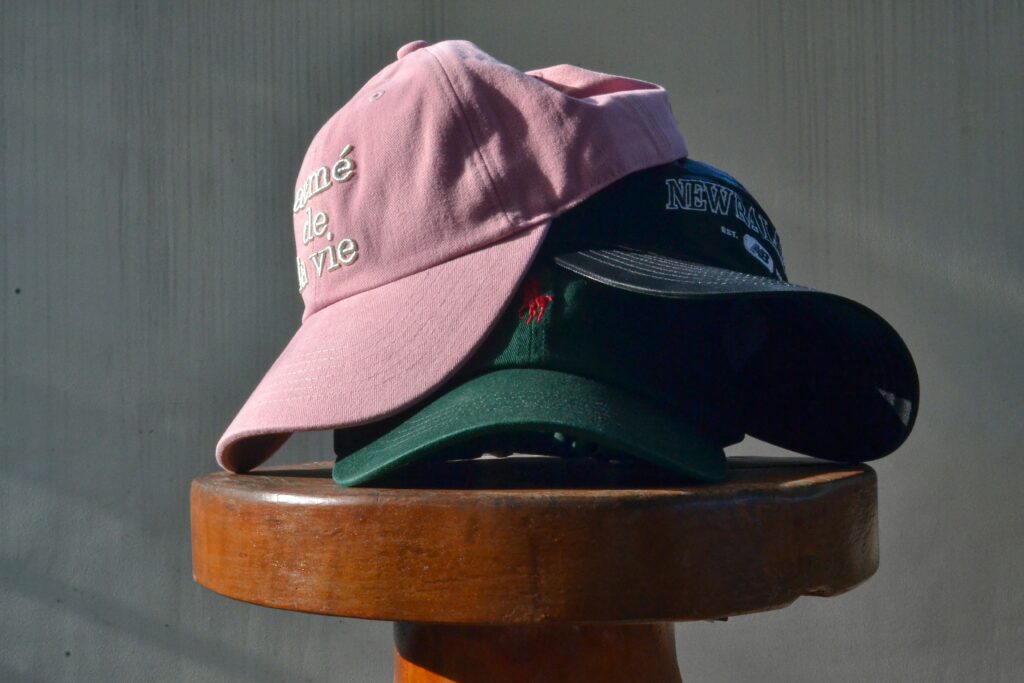
For small businesses, branding is about building trust. Embroidery naturally conveys quality because it adds texture, durability, and craftsmanship to a product.
Unlike printed designs that can fade over time, embroidered logos and graphics become part of the garment itself. This creates a premium appearance that customers often associate with established companies and retail-quality merchandise.
Creates a Professional First Impression
First impressions happen quickly. When customers see custom branding on polos, hats, jackets, or bags, they often perceive the business as more organized and credible.
For service-based businesses, embroidered uniforms help establish professionalism. For retail brands, embroidered merchandise creates a more elevated product offering that feels intentional rather than promotional.
How Small Brands Use Embroidered Merch
Employee Apparel
One of the easiest ways to strengthen a brand is through consistent employee apparel.
Popular options include:
- Polo shirts
- Quarter-zips
- Hats
- Work jackets
- Aprons
When employees wear coordinated apparel featuring an embroidered logo, it creates a unified brand experience and makes businesses look more established.
Event and Trade Show Merchandise
Small brands often compete with larger companies at trade shows, markets, and community events. Embroidered apparel with custom branding can help level the playing field.
A high-quality embroidered hat or quarter-zip instantly makes a booth feel more professional and memorable. It also gives staff a cohesive look that reinforces brand identity.
The result is a stronger presence without requiring a massive marketing budget.
Retail Merchandise
Many brands are discovering that customers prefer merchandise that feels like clothing first and advertising second.
Minimal embroidered designs have become especially popular because they’re subtle, stylish, and easy to wear.
Popular examples include:
- Small chest logos
- Sleeve embroidery
- Embroidered dad hats
- Beanies
- Minimalist tote bags
These products help customers connect with a brand while giving them something they’ll actually use.
Why Embroidery Works So Well for Small Businesses
It Adds Perceived Value
Embroidery often increases the perceived value of a product without requiring a complete redesign.
A simple sweatshirt with an embroidered logo can feel significantly more premium than the same sweatshirt with a basic printed design.
This allows brands to:
- Charge higher prices
- Improve perceived quality
- Differentiate themselves from competitors
It Encourages Long-Term Brand Visibility
The best promotional products are the ones people continue using.
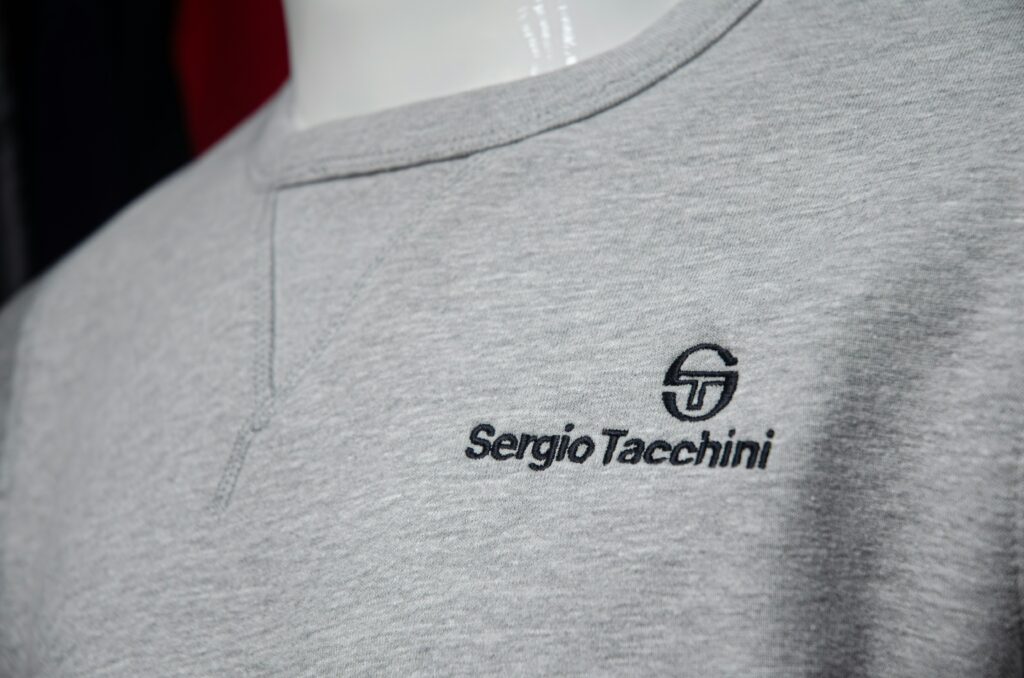
Because embroidered apparel tends to be more durable and stylish, customers are more likely to wear it repeatedly. Every time they do, your brand gains additional visibility.
Think of embroidery as marketing that continues working long after the initial purchase.
It Creates Consistency Across Products
One challenge for small businesses is maintaining a consistent brand identity.
Embroidery makes it easy to apply logos and branding elements across a variety of products, including:
- Hats
- Jackets
- Polos
- Bags
- Workwear
- Accessories
This consistency helps strengthen recognition and creates a more cohesive brand image.
Trending Embroidered Merch Ideas for Small Brands
Minimalist Logo Hats
Simple embroidered logos on neutral-colored hats continue to be one of the most popular branding tools for small businesses.
The understated look appeals to a wide audience while still promoting the brand.
Premium Hoodies
Custom hoodies remain one of the most versatile merchandise options. Small embroidered logos on the chest or sleeve create a retail-inspired look that customers genuinely enjoy wearing.
Branded Tote Bags
Reusable tote bags combine practicality with visibility. Embroidered designs help them feel more premium and durable than standard promotional bags.
Quarter-Zips and Outerwear
As brands focus more on employee apparel and client gifts, embroidered outerwear continues to grow in popularity.
These pieces often become long-term wardrobe staples, increasing brand exposure over time.
Tips for Designing Embroidered Merch That Customers Will Wear
Successful custom branding doesn’t have to be loud.
Some of the most effective embroidered products follow a few simple principles:
- Keep logos clean and readable
- Limit the number of colors
- Choose high-quality garments
- Use strategic placement rather than oversized graphics
- Focus on wearability first
When a product looks good enough to wear regardless of the logo, customers are far more likely to use it regularly.
Custom embroidery offers small brands a powerful way to build credibility, increase visibility, and create merchandise that feels premium. Whether you’re outfitting employees, preparing for an event, or creating retail merchandise, embroidered products help communicate quality and professionalism from the very first impression.
For growing businesses, the value lies in creating products that strengthen your brand and leave a lasting impact.
Ready to create custom merch that reflects your brand?
Whether you’re launching your first collection, outfitting your team, or looking for promotional products that people will actually use, custom embroidery can help your business stand out. Our team can help you choose the right apparel, placement, and design details to create merchandise that feels professional, memorable, and uniquely yours. Submit your
Request a quote today and bring your vision to life.
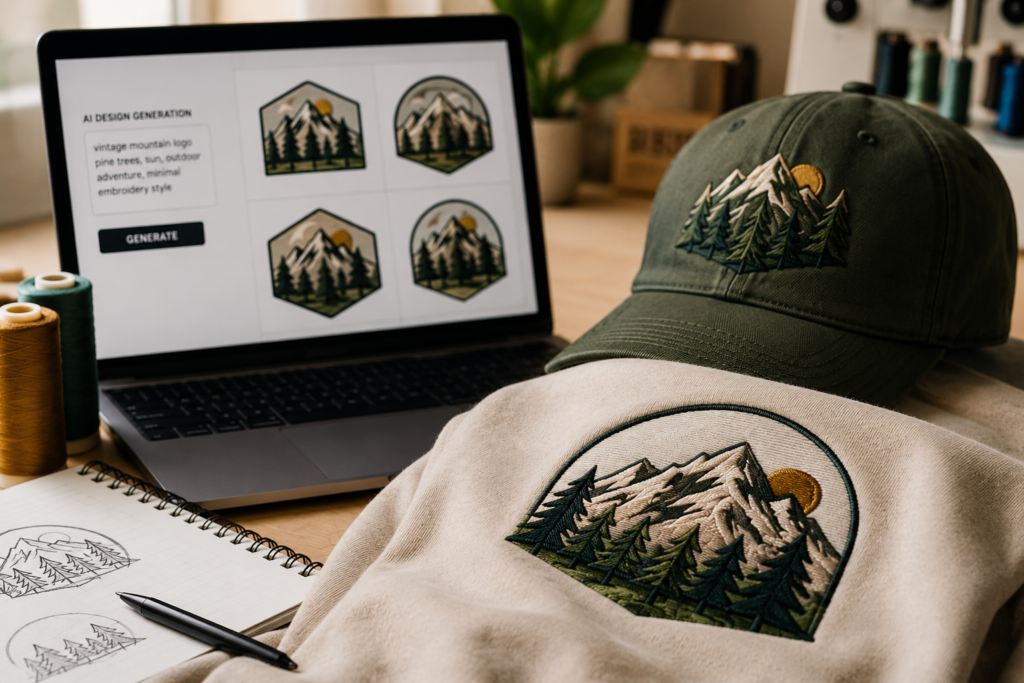
Like most things in life, AI has some advantages and disadvantages when it comes to AI designs for embroidery and screen printing. Obviously, it is still a new technology that we are all trying to get our arms around but there are a lot of promising uses so far, especially in the world of AI apparel design.
The Advantages of AI in Design
Never before has it been so easy to think of an idea and have it translated into graphics on a computer screen with just a couple of prompts. This is what is so exciting about having AI available for graphic design.
AI can take the simplest ideas and convert them into professionally laid out AI designs, which would have previously taken hours of back-and-forth between the creator and a graphic designer trying to decipher the vision in someone else’s head.
The Negatives of AI in Design
There are a lot of copyright issues that still have to be figured out. Most of the graphics we receive back from AI are coming from another image somewhere on the internet. There is no way for the general user to know if those AI designs are based on copyrighted material.
If they are protected images, how much needs to be changed so it isn’t considered copyright infringement? Also, how will all of this be enforced—and by who? These are still unanswered questions within AI apparel design.
Design Complexity Issues
The next concern is the complexity of the designs coming across our desk. Being in our position, we see all kinds of designs, and it used to be much easier to spot which companies worked with a graphic designer and who was piecing their artwork together themselves.
Most graphic designers understood the limitations when trying to embroider a design. There are certain design elements that are telltale signs—trying to fit too much information in a small space (graphically or with text), designs that combine large elements with very small details, or designs that are simply too complicated to be replicated.
With AI designs, anything is possible on a computer screen because it just requires turning a pixel on or off or changing its color. As long as the human eye can detect the change, then anything is possible digitally. However, when we transition artwork from the digital world to a medium such as thread or ink, that is when problems arise. Although AI can generate impressive artwork concepts, embroidered designs still require digitizing and optimization before they’re ready for production. This is where experience matters—being able to catch potential issues early and adjust designs before they reach production can make a significant difference in the final result.
Limitations of Embroidery and Printing
One major limitation of using AI designs in embroidery is in the translation of color gradients and shading. For example, when gradients are used, they add a feeling of the image being alive and transitioning from one color to the next. However, it is nearly impossible to achieve the same effect when using embroidery.
The reason is that we are working with thread that is dyed a discrete color. This thread cannot be faded in and out, so there is a hard stop where one color ends and the next begins. This does not lend itself to a smooth transition, and visually it is easy to see the starts and stops. This is one of the most common issues we see with AI apparel design.
Detail, Text, and Sizing Constraints
Another issue we see frequently is too much detail or text in AI designs. We are working with a finite amount of space—whether it is a full front print on a sweatshirt or a left chest design on a polo.
Designs have to work across a wide range of sizes, from a women’s extra small shirt to a 3XL. This means text should be .20” – .25” in height as a minimum so it remains legible, whether it is sewn or printed.
Hats are even more restrictive because they are a curved surface, and the design must fit between the eyelets and the bill. These are practical limitations that often aren’t considered in AI apparel design unless the prompts are very specific. If you’re unsure whether your design will translate well across different products, it’s worth having it reviewed before moving into production.
Testing AI’s Understanding
We were curious ourselves if AI understood the limitations of embroidery, so we asked it. Generally speaking, it was fairly accurate about lettering and the constraints of embroidery.
However, if the person requesting the design isn’t feeding the right prompts, then the AI won’t take those limitations into consideration when generating AI designs.
Overall, AI apparel design removes the barrier that once came with paying a graphic artist when creating a new logo for a startup company. Now, all it takes is a handful of carefully crafted prompts, and you can have a website, company apparel, and marketing guidelines in as little as 30 minutes.
While AI designs offer speed and accessibility, understanding the real-world limitations of embroidery and screen printing is still critical to achieving a successful final product.
If you’re working with an AI-generated design and want to make sure it turns out the way you expect, having a second set of experienced eyes on the artwork before production can help avoid common issues and ensure a cleaner end result.