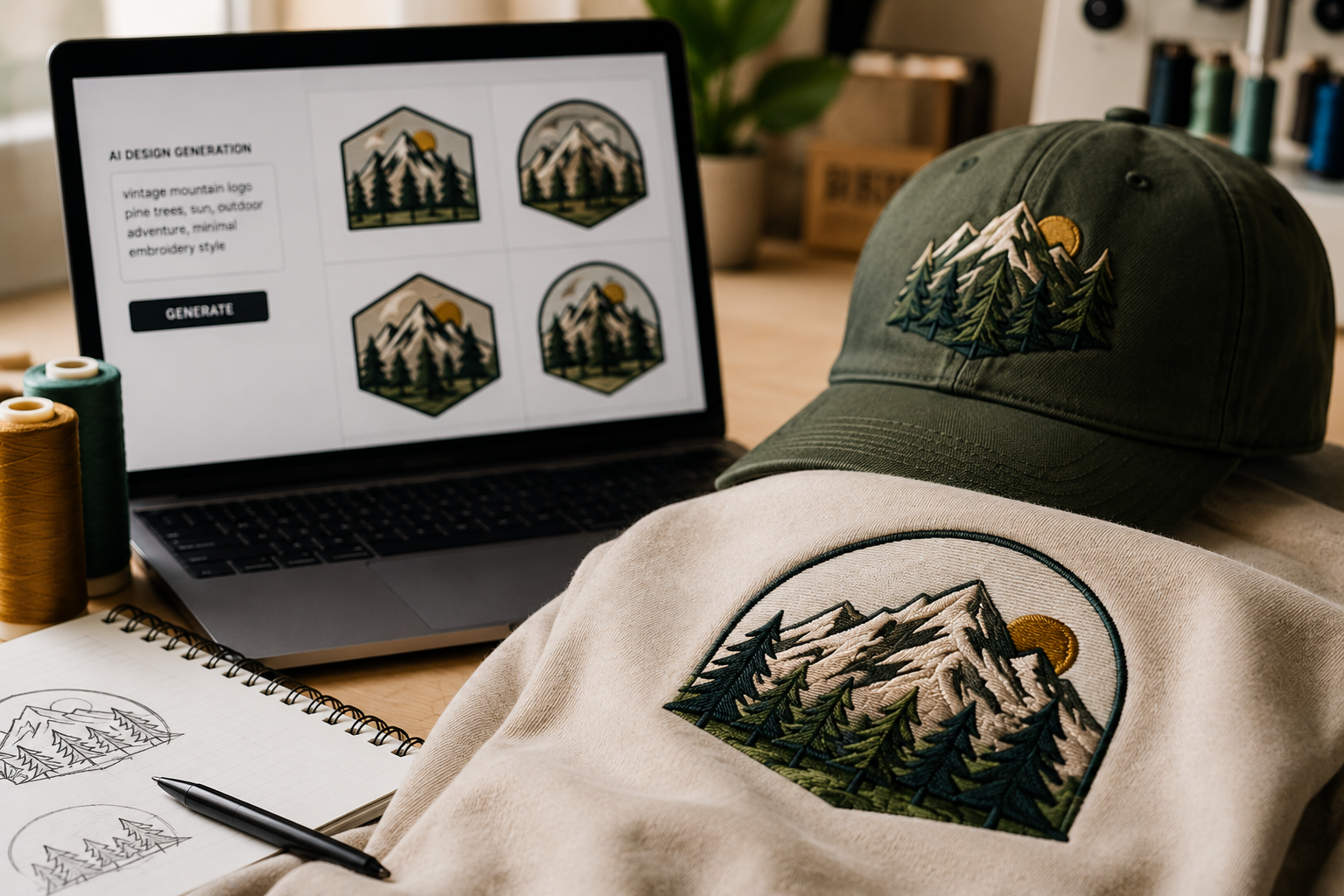
Like most things in life, AI has some advantages and disadvantages when it comes to AI designs for embroidery and screen printing. Obviously, it is still a new technology that we are all trying to get our arms around but there are a lot of promising uses so far, especially in the world of AI apparel design.
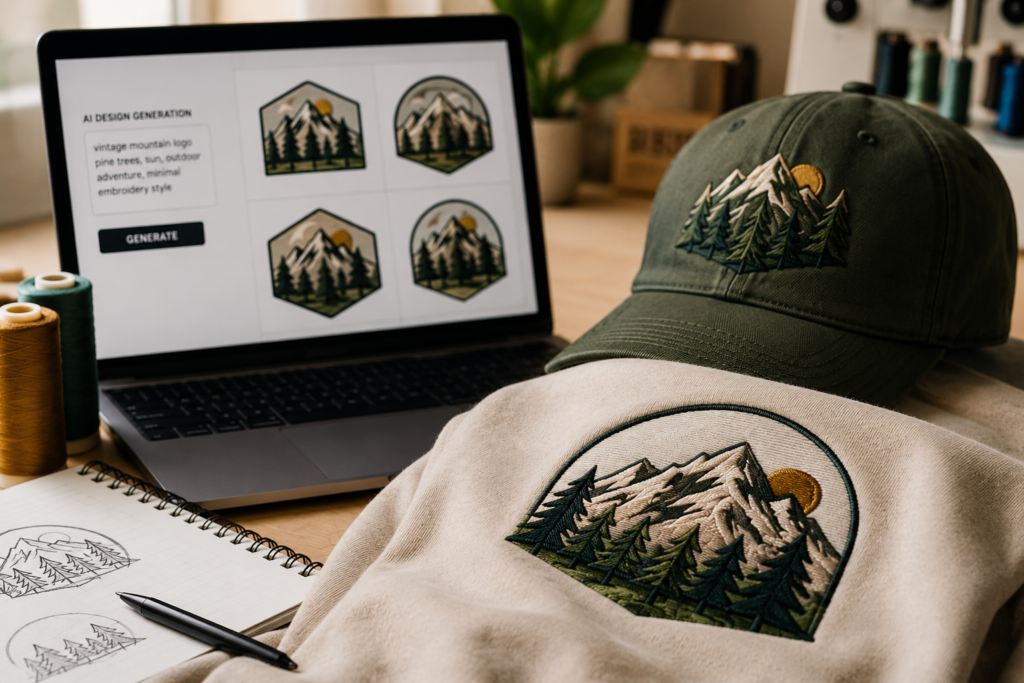
The Advantages of AI in Design
Never before has it been so easy to think of an idea and have it translated into graphics on a computer screen with just a couple of prompts. This is what is so exciting about having AI available for graphic design.
AI can take the simplest ideas and convert them into professionally laid out AI designs, which would have previously taken hours of back-and-forth between the creator and a graphic designer trying to decipher the vision in someone else’s head.
The Negatives of AI in Design
There are a lot of copyright issues that still have to be figured out. Most of the graphics we receive back from AI are coming from another image somewhere on the internet. There is no way for the general user to know if those AI designs are based on copyrighted material.
If they are protected images, how much needs to be changed so it isn’t considered copyright infringement? Also, how will all of this be enforced—and by who? These are still unanswered questions within AI apparel design.
Design Complexity Issues
The next concern is the complexity of the designs coming across our desk. Being in our position, we see all kinds of designs, and it used to be much easier to spot which companies worked with a graphic designer and who was piecing their artwork together themselves.
Most graphic designers understood the limitations when trying to embroider a design. There are certain design elements that are telltale signs—trying to fit too much information in a small space (graphically or with text), designs that combine large elements with very small details, or designs that are simply too complicated to be replicated.
With AI designs, anything is possible on a computer screen because it just requires turning a pixel on or off or changing its color. As long as the human eye can detect the change, then anything is possible digitally. However, when we transition artwork from the digital world to a medium such as thread or ink, that is when problems arise. Although AI can generate impressive artwork concepts, embroidered designs still require digitizing and optimization before they’re ready for production. This is where experience matters—being able to catch potential issues early and adjust designs before they reach production can make a significant difference in the final result.
Limitations of Embroidery and Printing
One major limitation of using AI designs in embroidery is in the translation of color gradients and shading. For example, when gradients are used, they add a feeling of the image being alive and transitioning from one color to the next. However, it is nearly impossible to achieve the same effect when using embroidery.
The reason is that we are working with thread that is dyed a discrete color. This thread cannot be faded in and out, so there is a hard stop where one color ends and the next begins. This does not lend itself to a smooth transition, and visually it is easy to see the starts and stops. This is one of the most common issues we see with AI apparel design.
Detail, Text, and Sizing Constraints
Another issue we see frequently is too much detail or text in AI designs. We are working with a finite amount of space—whether it is a full front print on a sweatshirt or a left chest design on a polo.
Designs have to work across a wide range of sizes, from a women’s extra small shirt to a 3XL. This means text should be .20” – .25” in height as a minimum so it remains legible, whether it is sewn or printed.
Hats are even more restrictive because they are a curved surface, and the design must fit between the eyelets and the bill. These are practical limitations that often aren’t considered in AI apparel design unless the prompts are very specific. If you’re unsure whether your design will translate well across different products, it’s worth having it reviewed before moving into production.
Testing AI’s Understanding
We were curious ourselves if AI understood the limitations of embroidery, so we asked it. Generally speaking, it was fairly accurate about lettering and the constraints of embroidery.
However, if the person requesting the design isn’t feeding the right prompts, then the AI won’t take those limitations into consideration when generating AI designs.
Overall, AI apparel design removes the barrier that once came with paying a graphic artist when creating a new logo for a startup company. Now, all it takes is a handful of carefully crafted prompts, and you can have a website, company apparel, and marketing guidelines in as little as 30 minutes.
While AI designs offer speed and accessibility, understanding the real-world limitations of embroidery and screen printing is still critical to achieving a successful final product.
If you’re working with an AI-generated design and want to make sure it turns out the way you expect, having a second set of experienced eyes on the artwork before production can help avoid common issues and ensure a cleaner end result.